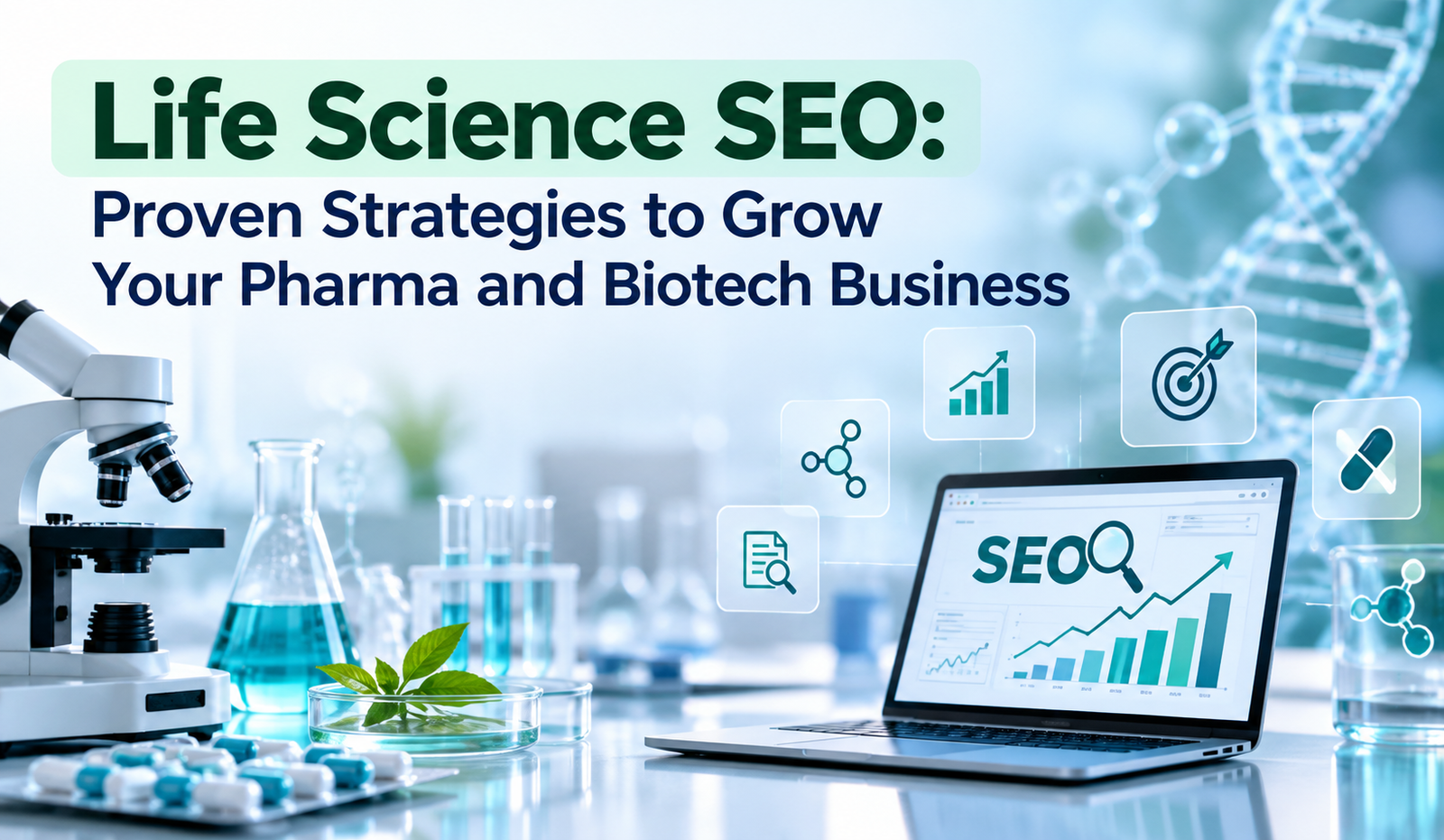
Life Science SEO: Proven Strategies to Grow Your Pharma and Biotech Business

Why Life Science SEO Matters for Business Growth The life sciences industry is evolving rapidly, with pharmaceutical companies, biotechnology firms, medical research organizations, laboratory equipment suppliers, and healthcare technology providers competing for digital visibility. Buyers, researchers, healthcare professionals, and business decision-makers increasingly use search engines to discover specialized products, evaluate service providers, and research scientific ...
Why Life Science SEO Matters for Business Growth
The life sciences industry is evolving rapidly, with pharmaceutical companies, biotechnology firms, medical research organizations, laboratory equipment suppliers, and healthcare technology providers competing for digital visibility. Buyers, researchers, healthcare professionals, and business decision-makers increasingly use search engines to discover specialized products, evaluate service providers, and research scientific solutions. For companies operating in this competitive market, life science SEO is an important strategy for attracting relevant audiences and building long-term online visibility.
Unlike general SEO, life sciences marketing requires a deeper understanding of technical terminology, scientific accuracy, audience intent, and industry-specific regulations. A pharmaceutical manufacturer may want to reach procurement managers, while a biotechnology company may target research institutions, laboratories, or potential business partners. Each audience has different information needs and follows a different path before making a decision.
A structured SEO strategy helps life sciences businesses connect with these audiences through relevant content, optimized website pages, and a technically sound website. With support from an experienced life science SEO agency, companies can improve their search visibility, strengthen credibility, and generate qualified business opportunities.
What Is Life Science SEO?
Life science SEO is the process of optimizing websites and digital content for businesses operating in pharmaceuticals, biotechnology, medical devices, laboratory services, scientific research, and related industries. It combines technical SEO, keyword research, content optimization, and authority building to improve visibility for relevant searches.
For example, a biotechnology company might want to rank for terms related to its research services, while a laboratory equipment supplier may target searches from organizations looking for specialized instruments. Effective optimization connects these commercial objectives with the information people actively seek online.
The goal is not simply to increase website traffic. It is to attract visitors who are relevant to the business, provide accurate information, and encourage meaningful actions such as submitting an inquiry, requesting a product demonstration, or contacting a sales team.
Why Life Sciences Companies Need a Specialized SEO Strategy
1. Reach a Highly Targeted Audience
Life sciences products and services often serve specialized markets. Generic keywords may generate visitors who have little interest in a company's actual offerings. A focused strategy identifies search terms that reflect specific products, services, applications, and buyer requirements.
For example, pharmaceutical contract manufacturing, biotechnology research services, laboratory testing services, and clinical research support attract different audiences. Developing dedicated pages for these offerings helps search engines understand the website and allows potential customers to find relevant information more easily.
2. Build Trust and Scientific Credibility
Trust is essential when people evaluate scientific, pharmaceutical, or healthcare-related information. Businesses must communicate their expertise clearly and support their claims with reliable information.
A strong SEO strategy prioritizes accurate technical content, transparent company information, qualified author contributions where appropriate, and credible references. These elements can improve the usefulness of a website and help visitors evaluate whether a company meets their requirements.
3. Generate Qualified B2B Leads
Many life sciences businesses operate through long B2B sales cycles. Potential customers may compare suppliers, review technical specifications, investigate certifications, and consult internal stakeholders before contacting a provider.
Life science SEO supports this journey by creating content for different stages of the buying process. Educational articles attract early-stage researchers, service pages reach prospects comparing solutions, and detailed product or capability pages help decision-makers assess suitability.
This approach can improve the relevance of incoming inquiries rather than focusing exclusively on traffic volume.
Essential Life Science SEO Strategies for 2026
1. Conduct Industry-Specific Keyword Research
Keyword research is the foundation of an effective SEO campaign. Life sciences companies should identify terms based on their services, products, target industries, and customer needs.
Relevant keyword categories may include pharmaceutical manufacturing services, biotechnology research solutions, laboratory testing services, medical device manufacturing, and life sciences consulting.
A professional life science SEO agency can also evaluate long-tail keywords that reflect specific requirements. These searches may have lower individual search volumes but can attract highly relevant business prospects.
Keyword selection should consider search intent, competition, commercial relevance, and the content available on the website. Search volume alone should not determine which terms receive priority.
2. Optimize Technical SEO and Website Performance
Technical SEO helps search engines discover, crawl, and understand website content. Even high-quality scientific content may struggle to perform if important pages cannot be indexed properly or the website delivers a poor user experience.
Businesses should review website architecture, page speed, mobile usability, XML sitemaps, canonical tags, redirects, broken links, and indexing issues. Clear navigation is particularly important for companies with extensive product catalogs, multiple research capabilities, or complex service offerings.
Structured data can also help search engines interpret eligible information when the markup accurately reflects visible page content. Technical improvements should be prioritized according to their potential impact on search accessibility, usability, and business performance.
3. Create Scientifically Accurate, Helpful Content
Content plays a central role in life science SEO because audiences often need detailed explanations before choosing a product or service. Companies should publish content that answers genuine questions and demonstrates relevant expertise.
Useful content formats include technical guides, research-based articles, product documentation, service pages, industry explainers, and frequently asked questions. Each piece should address a clear audience need instead of repeating keywords without adding meaningful information.
For scientific and healthcare-related topics, accuracy is especially important. Content should be reviewed by qualified subject-matter experts when necessary, and medical or scientific claims should be supported by appropriate evidence. Pharmaceutical and healthcare businesses must also consider applicable advertising, privacy, and regulatory requirements.
4. Build a Strong Internal Linking Structure
Internal links help visitors navigate related information and help search engines discover important pages. A life sciences website can connect educational blog posts with relevant service pages, product categories, technical resources, and company capability pages.
For example, an article about biotechnology research may link to a relevant research service page. A guide to laboratory testing can direct readers toward the company's testing capabilities.
Links should be contextually relevant and use descriptive anchor text. A logical structure makes complex websites easier to navigate and helps visitors move from learning about a subject to evaluating a business offering.
5. Strengthen Authority Through Relevant Backlinks
Backlinks from relevant and credible websites can help search engines understand how pages relate to the wider web. For life sciences companies, quality matters more than simply accumulating large numbers of links.
Potential opportunities include scientific publications, reputable industry associations, relevant business directories, research collaborations, educational resources, and legitimate industry contributions. Companies can also earn links by publishing original research, useful technical resources, or expert commentary.
Avoid manipulative link schemes and unrelated bulk submissions. A sustainable approach focuses on relevance, editorial value, and genuine relationships.
How a Life Science SEO Agency Supports Business Growth
Working with a specialized life science SEO agency can help companies coordinate technical optimization, content development, keyword targeting, and performance measurement.
The process generally begins with an SEO audit to identify indexing issues, content gaps, keyword opportunities, and website usability problems. The next step is to develop a roadmap aligned with business priorities and target audiences.
An experienced SEO team can then optimize key landing pages, develop content clusters, improve internal linking, and monitor performance. Regular reporting helps businesses understand which pages attract qualified visitors and which improvements require further attention.
At seofox.io, businesses can explore industry-focused optimization through our pharma and healthcare SEO services. A tailored approach helps align website optimization with the needs of specialized industries instead of relying on a generic SEO checklist.
Measuring the Success of Life Science SEO
SEO performance should be evaluated using metrics that reflect visibility and business outcomes. Rankings and organic traffic provide useful insights, but they do not tell the entire story.
| SEO Metric | Why It Matters |
|---|---|
| Organic clicks | Measures visits generated through unpaid search results |
| Search impressions | Shows how frequently pages appear in search results |
| Keyword rankings | Tracks visibility for relevant target queries |
| Qualified inquiries | Measures potential business opportunities generated |
| Landing page conversions | Evaluates how effectively pages encourage action |
| Indexed pages | Helps identify content discovery and indexing issues |
Businesses should establish baseline measurements before making major changes. Results can vary depending on competition, website history, content quality, technical conditions, and available resources. SEO typically requires consistent work over several months, and no agency can guarantee specific rankings.
Regular analysis allows teams to refine their strategy based on actual performance rather than assumptions.
Common Life Science SEO Mistakes to Avoid
One common mistake is publishing technical content without considering the audience. Scientific terminology may be necessary, but explanations should remain understandable to the intended reader. Another issue is targeting broad keywords that do not reflect the company's products or commercial objectives.
Some businesses also overlook technical problems, duplicate content, weak service pages, and missing conversion opportunities. Others invest in backlinks without developing useful content that deserves attention.
A successful strategy combines technical foundations, accurate content, relevant keyword targeting, and ongoing performance analysis. Businesses should also review scientific claims and applicable compliance requirements before publishing or updating content.
Conclusion: Build Long-Term Visibility With Life Science SEO
Life sciences companies need a focused digital strategy to reach specialized audiences, communicate expertise, and generate meaningful business opportunities. Life science SEO helps organizations improve organic visibility by aligning technical performance, scientific content, keyword research, and website experience with their business goals.
Whether a company operates in pharmaceuticals, biotechnology, laboratory services, medical devices, or scientific research, a structured SEO approach can support sustainable digital growth. Consistent optimization, useful content, and reliable measurement provide a stronger foundation than short-term ranking tactics.
seofox.io helps businesses explore SEO strategies tailored to specialized industries. By focusing on relevant audiences, technically sound websites, and measurable outcomes, companies can build a stronger online presence and create more opportunities for long-term growth.
Ready to Improve Your Search Visibility?
Looking to strengthen your website's organic performance and reach more relevant business prospects? Connect with seofox.io to discuss your SEO goals and explore an approach tailored to your industry.
Contact Information
Call Us: +91 87675 32568
Email: contact@seofox.io
Visit Our Office: Office No. 17, Vedant Commercial Complex, Vartak Nagar, Thane West – 400606, Maharashtra, India
Website: https://seofox.io/
Frequently Asked Questions
1. What is life science SEO?
Life science SEO is the process of improving the search visibility of pharmaceutical, biotechnology, laboratory, medical device, and scientific research websites through technical optimization, keyword targeting, content development, and relevant authority building.
2. Why do life sciences companies need SEO?
SEO helps life sciences companies reach relevant audiences, communicate technical expertise, improve organic visibility, and attract potential customers who are actively researching their products or services.
3. What does a life science SEO agency do?
A life science SEO agency can conduct website audits, research industry-specific keywords, optimize service pages, develop scientifically accurate content, improve technical performance, and measure organic traffic and lead generation.
4. How long does life science SEO take to show results?
SEO results depend on website condition, competition, content quality, and the scope of optimization. Businesses may begin noticing improvements within a few months, although meaningful and sustainable growth often requires ongoing work.
5. Which keywords should life sciences companies target?
Companies should prioritize relevant commercial and informational keywords related to their products, services, research capabilities, and customer requirements. Long-tail keywords can be valuable when they closely match the needs of potential customers.
6. Can SEO generate B2B leads for pharmaceutical and biotechnology companies?
Yes. Well-targeted SEO can attract relevant decision-makers and researchers, guide them toward useful service information, and encourage inquiries through optimized landing pages, technical resources, and clear calls to action.